
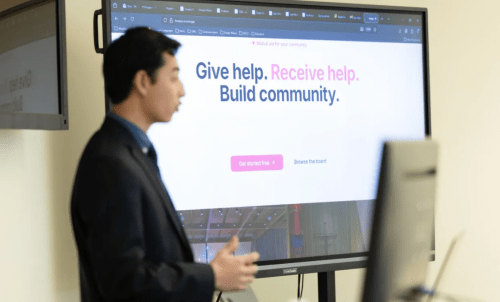
Business, engineering and computer science teams tackled problems from concept to pitch.
We live in a highly interconnected world. To achieve true success, learning how to work together is essential. On March 27 and 28, 2026, Saint Martin’s University held an Entrepreneurship Hackathon where teams of business, computer science, and engineering students tackled real-world challenges. From concept to final pitch, these intrepid groups combined their education and expertise to create innovative solutions.
Teams were encouraged to design an app, business model or physical prototype that turned “what if” into “what’s next?” Cash prizes were awarded by a panel of judges based on creativity, innovation, impact and execution.
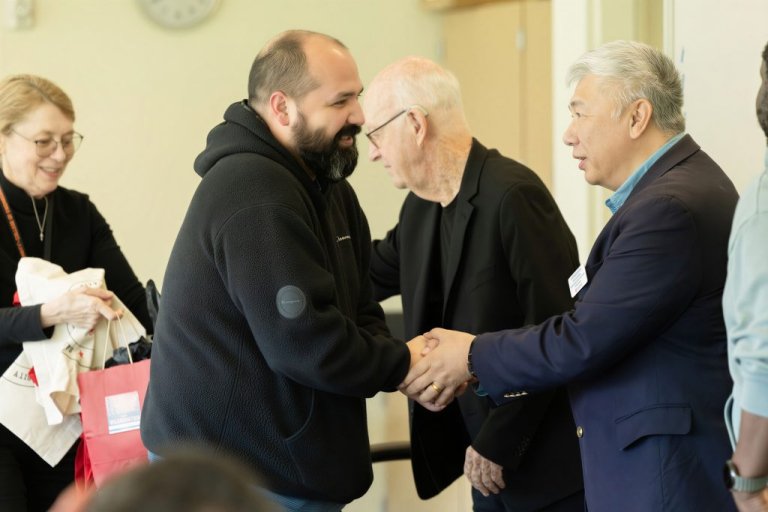
Saint Martin’s Hackathon students work across majors to solve major real-world issues
Dr. Radana Dvorak is an associate professor and chair of Saint Martin’s computer science department. She explains that this inaugural event “was exciting precisely because it asked our students to do something harder than build clever software; it asked them to use their creativity to build something for good.”
Teams focused on at least one Benedictine hallmark as their project’s anchor. “This meant students weren’t just writing code,” explains Dvorak, “they were reasoning about stewardship, community, hospitality and dignity, and then making engineering decisions in light of those commitments.” Even more impressively, they accomplished all of this in just 24 hours, and every single project was successful.
Dvorak says that the event gave faculty an opportunity to see students at their best. They witnessed multidisciplinary collaboration, work – and compromise – under pressure, defense of a project to judges, and firsthand real-world application of technology that’s shaped by moral traditions.
She hopes the final projects become assets that “can be turned into capstone continuations, or undergraduate research, or that students can continue to work with the products and the community delivering a meaningful solution to benefit others, enabling good work continuing instead of ending at the awards ceremony. Furthermore, students can showcase products in interviews, on resumes or social media sites like LinkedIn to assist with finding a great job.”
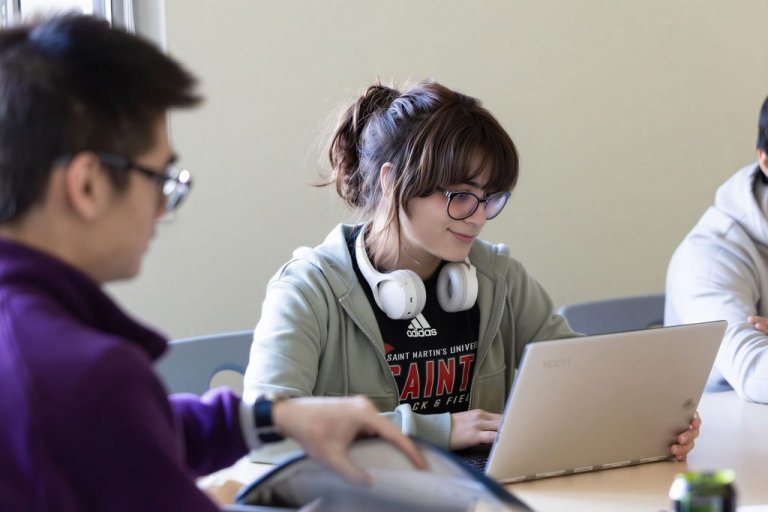
Hackathon For Good winner StillGood keeps food out of landfills
The Hackathon For Good winners were Lemmar Wilson and Rocket Salas with their project, StillGood. This is an app that features a real-time interactive map of surplus food available for donation that can be accessed by people in need. The runner-up was SurvivalAI, an offline-capable program designed to provide real-time survival guidance and information in critical situations.
Lemmar Wilson says that he and teammate Rocket Salas spent around three hours coming up with ideas and admits that some of this brainstorming was good, some ridiculous. He appreciates that the entire project was student-powered and even lined up with some of their ongoing classes.
“That same week I was writing a Social Justice Call to Action paper on algorithmic bias for another course,” says Wilson, “so thinking about tech as a tool for equity was already front of mind. Competitions like this matter because hackathons teach you how to ship. You’re forced to make hard calls about what to actually build versus what to just talk about in the presentation, and you learn to deliver working code on a real deadline. That kind of pressure is hard to replicate in a normal class. It’s also where I think engineering stops being theoretical and starts feeling like the job.”
Rocket Salas says their app focused on the Benedictine value of Stewardship by ensuring food reaches people instead of landfills and through expiration-aware scheduling and minimal data collection. It also addressed Love of Christ and Neighbor because AI-assisted listings lower the barrier to generosity while real-time maps remove friction for shelters in crisis. The third value the app centered was Community, since the app’s chat feature builds relationships between donors and recipients, and the impact dashboard celebrates collective achievement rather than individual merit.
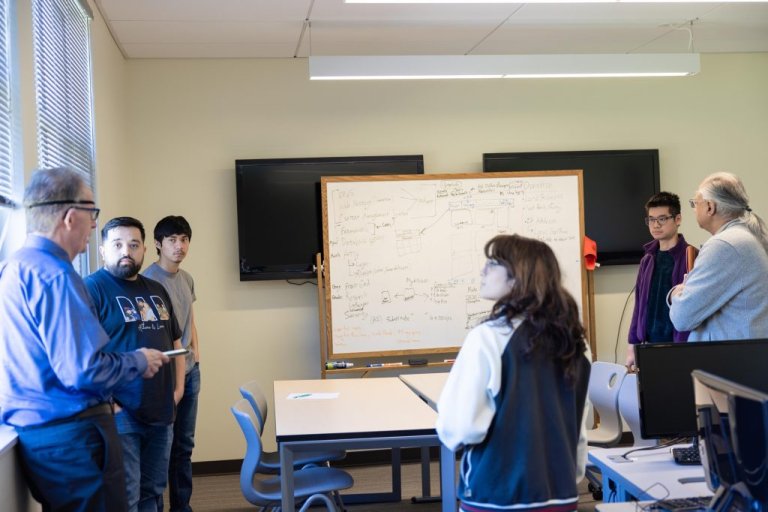
Benedictine values meet 21st century innovation at Saint Martin’s University
For many years, the Saint Martin’s vision has centered on holistic development, collaborative exchange and an integrated approach to both teaching and learning. This commitment is exemplified through interdisciplinary, real-world projects like the inaugural Hackathon For Good.
If you know a student interested in business, engineering, and technology, computer science, information technology, cybersecurity or one of the many other degrees offered through the Hal and Inge Marcus School of Engineering, reach out today to learn more, ask questions or begin the enrollment process.
Prospective students and their families can call 360-688-2113 or schedule a visit online. Admissions staff are happy to chat or arrange a tour incorporating your major or field of study. With so many options and coursework choices, your future Saint might even decide to participate in the 2027 Hackathon for Good and make our world a little better, one invention at a time.
Published