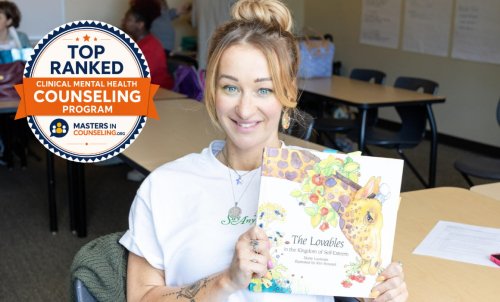
LACEY, Wash. — Saint Martin's University's Master of Arts in Counseling (MAC) program has been ranked No. 5 among the Best Clinical Mental Health Counseling Programs in Washington for 2027, recognizing the MAC program's commitment to preparing skilled, compassionate mental health professionals dedicated to serving their communities with integrity.
The ranking, published by MastersInCounseling.org, evaluates clinical mental health counseling master's programs across the country based on factors including CACREP accreditation, graduate earnings, student debt, graduation and retention rates, program flexibility and clinical training quality. The rankings draw on publicly available federal education data and the site’s own research into each program.
"This recognition reflects the dedication of our faculty and the strength of a program designed to prepare counselors who are knowledgeable, ethical and responsive to the needs of the people they serve," said Johanna Powell, Ph.D., LMFT, director of the Saint Martin's MAC program. "We want our graduates to enter the profession with the clinical skills, practical experience and cultural awareness needed to build meaningful connection and make a lasting difference in the lives of others."
The MAC program prepares graduates for careers in clinical mental health counseling through a curriculum that emphasizes professional knowledge of human growth and development, counseling skills, honoring the unique context of each client, and using research to inform clinical practice. The program is designed to help students develop the competencies needed to support individuals, couples and families while responding to the evolving behavioral health needs of their communities, promoting belonging, empowerment and collaborative growth.
"In our Benedictine tradition, we learn to listen with the ear of the heart. For a counselor, that begins with a willingness to hear a person’s story and to honor the dignity of the one who tells it; it is in this light that our MAC program integrates these values into the degree," said University Provost Javier Clavere, D.M.A. "This recognition affirms the work of our Master of Arts in Counseling faculty and students. Together, they bring rigorous clinical preparation and the Benedictine practice of listening into the service of our communities."
As demand for qualified mental health professional continues to grow, Saint Martin's remains committed to preparing graduates who will help meet critical behavioral health needs across Washington and the nation. Through rigorous academic preparation, professional development and an emphasis on service, the MAC program equips future counselors to make a meaningful difference in the lives of the people in their communities.
About Saint Martin’s University:
Saint Martin’s University is an independent coeducational university, with undergraduate and graduate offerings, located on a wooded campus of more than 380 acres in Lacey, Washington. Established in 1895 by the Catholic Order of Saint Benedict, the University is one of 13 Benedictine colleges and universities in the United States and Canada, and the only one west of the Rocky Mountains. Saint Martin’s University empowers students to pursue a lifetime of learning and accomplishment through its 31 majors, 11 master’s programs, one doctorate program and six certificate programs spanning the arts and sciences, business, counseling, education, engineering, nursing, and leadership. Saint Martin’s welcomes more than 1,300 undergraduate students and 250 graduate students from many ethnic and religious backgrounds to its Lacey campus, and more students to its extended campus located at Joint Base Lewis-McChord.
About MastersInCounseling.org:
MastersInCounseling.org is an educational resource that maps master's-level counseling degrees to state-by-state licensure requirements and career outcomes. Relying on primary datasets from federal agencies and professional accrediting bodies, the site helps prospective counselors compare graduate programs, decode clinical credentials, and navigate post-graduate supervision.
Published